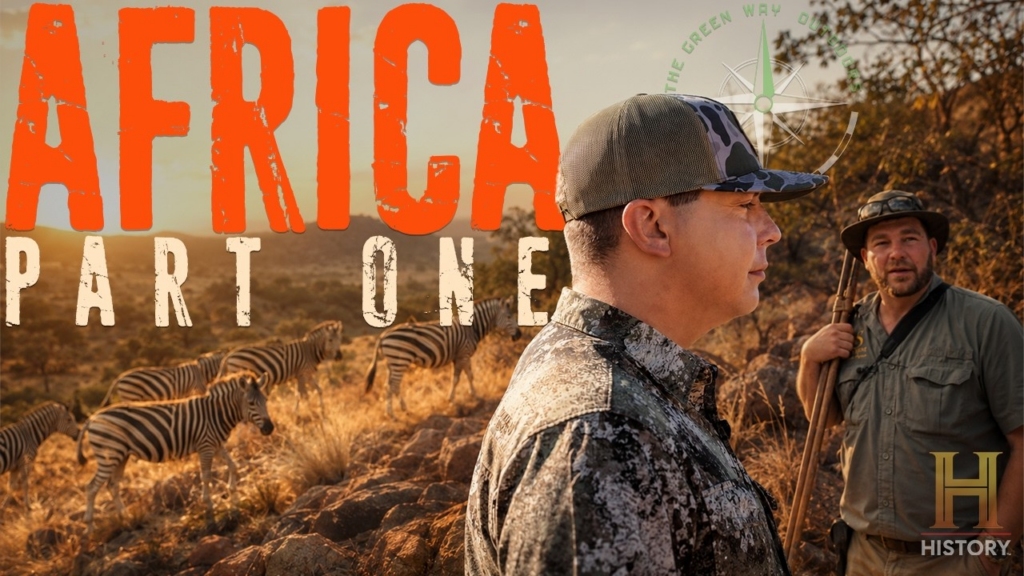

The final chapter of The Green Way Outdoors’ South Africa adventure with Steele Game Safaris begins deep in the African bush with a rhino conservation mission unlike anything Kyle has experienced before.
A massive White Rhino has lost the tracking device used by the team protecting him from poachers. He is also due for critical immunizations and health testing, but first they have to find him. What sounds simple quickly becomes a true tracking mission on foot through miles of thick South African bush, sharing the same terrain with Cape buffalo and other dangerous wildlife.
After nearly six hours and more than ten miles of searching, the team finally locates the rhino.
Kyle’s job is to place a new tracking dart while veterinarian Dr. Alex Lewis administers the tranquilizer. Both shots connect, but once the rhino disappears into the brush, the team has to move quickly to find him before the drugs fully take effect.
Then everything changes.
As the crew approaches what they believe is a safely immobilized rhino, the 6,500-pound animal suddenly gets back to his feet and charges. Our DP (director of Photography) Andy is knocked into the brush and struck by the rhino, escaping serious injury by an incredible margin. Once everyone is safe, the veterinary team is finally able to complete the work they came to do, replacing the failed tracking equipment, administering the rhino’s immunizations, and collecting blood for health testing.
For Kyle, the experience becomes much bigger than the adrenaline of getting close to one of Africa’s most powerful animals. It is a firsthand look at the people who dedicate their lives to protecting wildlife and the constant work required to keep an animal like this alive and protected.
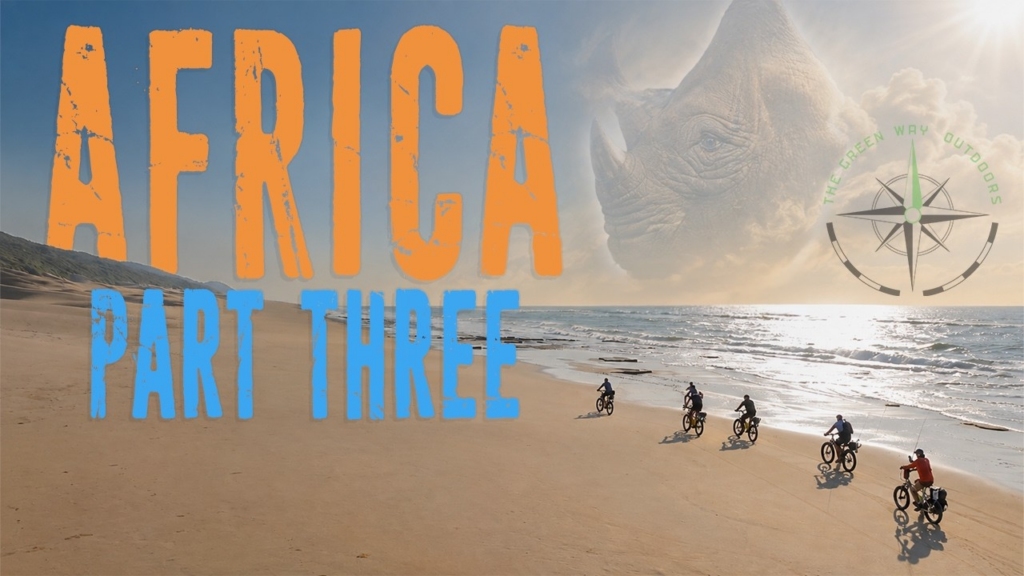
From the bush, the journey shifts to the shores of Saint Lucia and the Indian Ocean, where miles of untouched beach and towering dunes reveal a completely different side of wild Africa. Kyle joins a local tagging program targeting reef fish from shore, measuring and tagging fish so researchers can learn more about their growth, movements, and behavior when those fish are caught again.
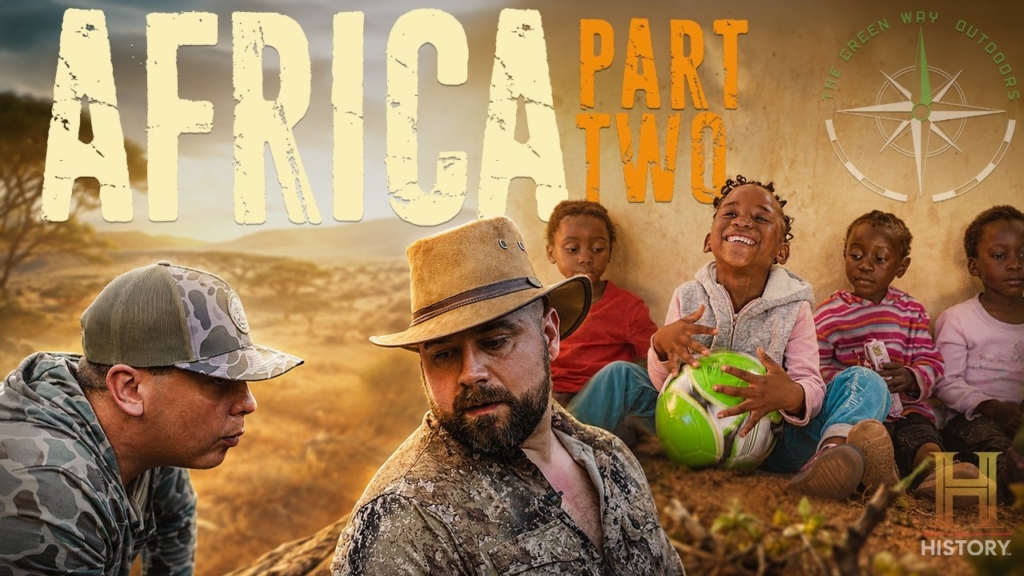
Across all three parts of this South African journey, the same idea continues to surface: protecting wild places requires people willing to put in the work. The animals harvested earlier in the trip helped feed families. Money spent locally supported the communities surrounding these wild places. Wildlife research provided valuable information for the future. And in this final chapter, helping one rhino and tagging fish along the Indian Ocean becomes another reminder that responsible stewardship takes many different forms.
As Proverbs reminds us, “The righteous care for the needs of their animals.”
This is conservation in action. This is community. This is The Green Way Outdoors.