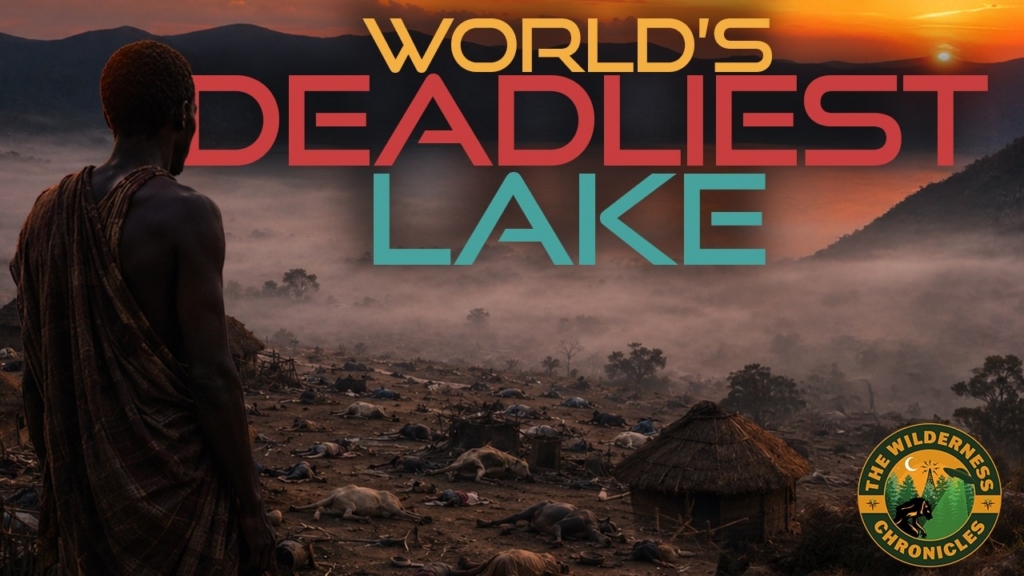
Lake Nyos looks calm now, but on August 21, 1986, this crater lake in Cameroon became one of the deadliest natural traps in modern history.
In a single night, the lake released a massive cloud of carbon dioxide that rolled down into nearby villages and suffocated more than 1,700 people and thousands of animals. No fire. No flood. No predator. Just invisible gas moving through the valleys like water.
This episode of Wilderness Chronicles dives into the terrifying true story of Lake Nyos, the eyewitness accounts from the people who survived, and the science behind a rare event called a limnic eruption. We break down how a lake can store gas under pressure, why the water turned red after the disaster, how carbon dioxide can kill so quickly, and why scientists had to build a system to slowly release the gas before it could happen again. But Lake Nyos is only part of the story.
We also look at other deadly water based natural hazards around the world, from Yellowstone hot springs and hydrothermal explosions, to methane trapped under frozen lakes, to ancient stories that may have been warnings long before modern science could explain them.
This one changes the way you look at still water. Because sometimes the wilderness is not dangerous because it moves. Sometimes it is dangerous because it waits.
Watch the full episode of Wilderness Chronicles: Killer Lakes and let us know what you think is more terrifying: a lake that can explode, or the fact that people may have been warning each other about places like this for thousands of years.